
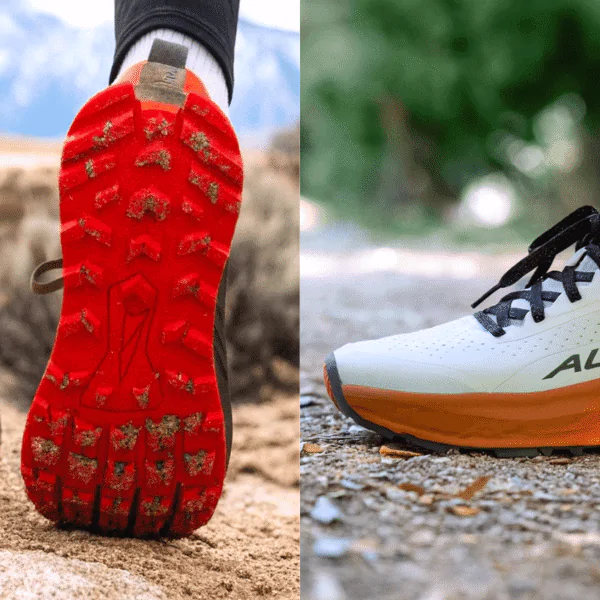
I’m lining up two Altra trail staples: Lone Peak 9 vs. Olympus 5. Both are zero-drop. Both have that roomy, foot-shaped fit. But they ride nothing alike. Lone Peak 9 is lighter, firmer, ~25 mm stack with MaxTrac—my choice when
I want ground feel on mixed trails. Olympus 5 is max cushion, ~33 mm stack with Vibram Megagrip—what I take for rocky routes, big mileage, or tired feet. I’ll judge them on fit/lockdown, protection, grip, durability, and how they handle a loaded pack.
How I Judge Hiking Shoes
Here’s how I test trail shoes. Fit and lockdown come first. If the heel slips or my toes jam on descents, it’s out. Next is midsole feel—how it cushions sharp rock and how much energy it gives back after hour three.
Then I look at protection and grip. I want enough underfoot shielding without killing ground feel. Wet roots, loose gravel, slab—traction has to be predictable.
Durability matters. Uppers shouldn’t blow at the toebox, and lugs shouldn’t peel before a few hundred miles. Weight and breathability round it out. If a shoe runs hot or feels clunky with a pack, it doesn’t make my kit.
Fit & last
The Lone Peak 9 is a classic Altra foot shape with extra forefoot volume. My toes splay naturally and never hit the rand on descents. The heel is more secure than older LPs, so I get less slip without cranking the laces.
The Olympus 5 feels more sculpted through the midfoot with a slightly snugger heel collar. It locks in well for steep downs, but the ankle/Achilles padding can rub if you’re sensitive there. The toe box is roomy, just not as cavernous as the LP9.
Sizing: Both run true for me. For loaded miles and swelling, I still consider a half-size up in the Olympus; I stay regular length in the Lone Peak 9.
Cushioning & Ride
The Lone Peak 9 rides lower and firmer. I get real ground feel, quick flex, and predictable stability on off-camber rock. It’s snappy enough for brisk hiking and light runs without feeling harsh.
The Olympus 5 is max cushion. Tall, soft, and very protective over rubble and long fire roads. It smooths everything out but feels less precise in tight, technical moves.
Great for big days and heavy packs; not my pick when I want agility.
Traction & Outsole Durability
On mixed trails, the Lone Peak 9 bites well. The MaxTrac pattern and flexible platform let the lugs conform to roots and rock, so I trust it on damp slab and off-camber sidehills. Wear is decent—better than older LPs—but it’s still a lightweight compound, not a tank.
The Olympus 5 grips hard with Vibram on loose gravel and granite. On wet rock, it’s secure, but the tall stack dampens “edge bite” in awkward traverses. My caveat is durability: some pairs show outsole peel at the glue line.
When the bond holds, mileage is great; if it doesn’t, you’ll notice early. I check the lugs after big, wet days.
Upper Protection & Durability
The Lone Peak 9 finally feels reinforced where I need it. The mesh breathes, the toe bumper is beefier than past LPs, and the welded overlays take daily scuffs without blowing out. It’s still a lightweight upper—weeks of talus will fuzz the forefoot mesh—but for mixed trails, it holds up and keeps the toes safer than older versions.
The Olympus 5 is burlier. More sidewall structure, thicker overlays, and a padded heel collar shrug off brush and rock rash. It runs warmer and needs a short break-in—the Achilles tab can poke until it softens.
Long-term, the upper materials are stout; if anything fails early, it’s usually glue at the rand/outsole, not the fabric. I inspect those bonds after wet, rocky days.
Lockdown & Stability
On the Lone Peak 9, the heel finally stays put. The narrower heel pocket plus a firmer midsole gives me clean edging on sidehills. I use a runner’s loop and light-to-mid socks; that combo keeps the rearfoot locked without crushing the forefoot.
The Olympus 5 rides on a wider, taller platform, so it feels naturally planted on rubble and steps—if the heel is seated. If I feel any slip, I re-lace through the top eyelets, snug the midfoot, and add a thin insole shim. Do that, and the shoe tracks straight; skip it, and confidence drops fast.
Weight On Foot
The Lone Peak 9 feels lighter in the swing. Quicker turnover. Less calf load on long climbs. I can place my feet fast and keep the cadence high.
The Olympus 5 carries more mass. You notice it on sustained ascents and sidehills. The cushion saves your soles late in the day, but the extra heft taxes hips and glutes.
If I’m chasing miles or moving fast and light, I take the Lone Peak 9. If I’m hauling a pack and want underfoot relief, I accept the Olympus 5’s weight.
Price & Value
Value tilts toward the Lone Peak 9. It’s $140, or $155 for the 9+ with the Vibram outsole. That’s fair for a do-everything trail shoe that lasts a season of real miles.
The Olympus 5 launched around $170. Today it’s often on sale for $95–$120 depending on size and color. At that price, it’s a steal if you want max cushion. At full retail, I’m picky because midsole life and outsole glue have been hit-or-miss.
Pay full price for the Lone Peak 9 (or spring for the 9+ if you chew through rubber). Hunt deals on the Olympus 5; when you find one in your size, grab it.
When I Сhoose Each
If the route is mixed, fast, and I’m on my feet all day, I grab the Lone Peak 9. It feels lighter, edges predictably, and the heel hold is dialed. Wet rock or abrasive granite? I’ll switch to the 9+ for the Vibram bite.
Big miles, heavy pack, chunky descents—this is Olympus 5 territory. The platform smooths chatter and saves my legs late in the day. I just lock the heel with a runner’s loop and it settles in. If temps climb or the trail gets spicy and tight, I go back to the Lone Peak.
Key Differences
The Lone Peak 9 feels like a trail tool; the Olympus 5 feels like suspension. One is nimble and precise with a snugger heel and natural toe-splay. The other is a big, calm platform that mutes chatter and keeps pace when the pack gets heavy. LP 9 (or 9+) grips well, edges cleanly, and disappears on foot;
Olympus 5 cushions more and asks for careful lacing to lock the heel. Durability tilts toward the LP 9+ if you want Vibram; the Olympus can be great but has more variability pair to pair. Price favors the Lone Peak at full retail, while the Olympus is a steal on sale.
I hike fast and light in the Lone Peak 9, especially on technical, mixed terrain. For long days, loaded miles, and beat-up descents, I take the Olympus 5 and enjoy the ride.
Leave a Comment