
New tent campers—or really any tent campers—often make mistakes in wet, rainy spring weather.
Mistake #1: Water Resistant vs. Waterproof
Most people don’t realize there’s a difference between water-resistant and waterproof.
In fact, people often think they’re the same thing.
We’ve got a water-resistant tent here—technically water resistant—and we also have a technically waterproof tent.
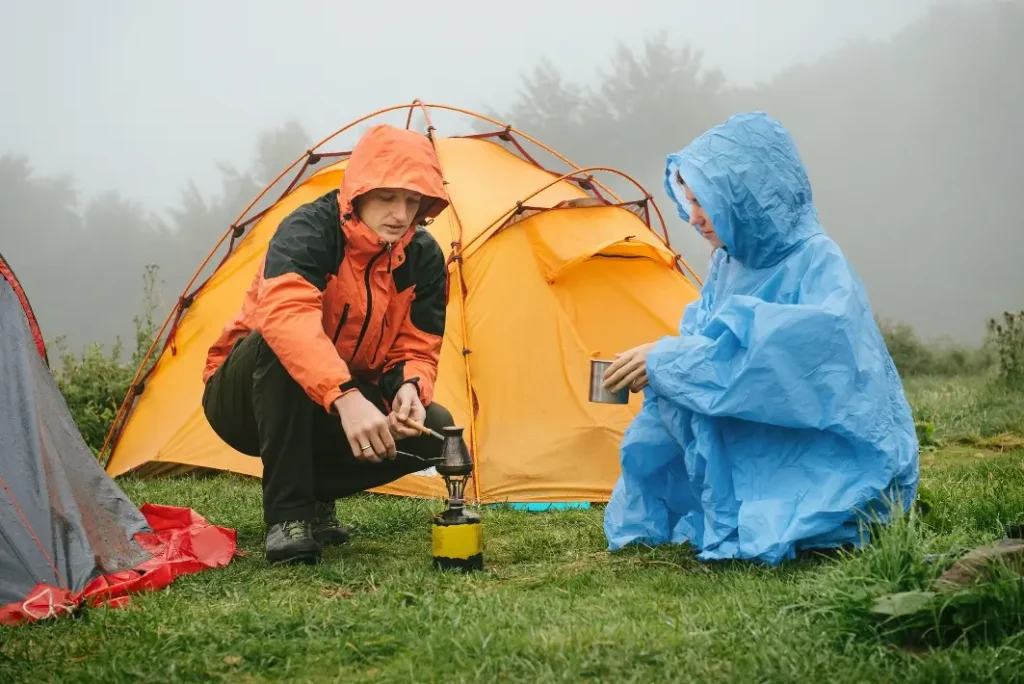
Photo Credit: Weather.metoffice.gov.uk
The Big Agnes Copper Spur Platinum. It’s pretty expensive, so you’d really hope it’s waterproof. But even a tent like this isn’t truly waterproof.
It’s made out of nylon. And nylon isn’t waterproof—just very water-resistant, depending on how it’s manufactured.
This one’s already starting to sag a little bit from the rain. It’s stopped raining now, but it’s only been set up for maybe an hour.
You can go online to the manufacturer’s site and look up what’s called the hydrostatic head.
Hydrostatic Head
This tent is thin.
Press on it, and you can almost see right through. So, how do you know if a tent will actually keep out water?
Look for something called the hydrostatic head rating. It’s measured in millimeters. The higher the number, the better the water resistance.
Here’s how they test it:
They place a column of water on the fabric. The height of the water—before it starts to leak through—that’s the rating.
If a tent is rated at 1,000mm, it’ll hold up a bit… but not forever. It’ll eventually leak. 5,000mm is a lot better. That’s what you want if you’re camping in the rain.
Sometimes you’ll pay more for higher ratings. But now you know what to look for before you buy.
Waterproof Tent
Now let’s talk about a tent that actually keeps water out. This one’s made from Dyneema. You might also see it called DCF—short for Dyneema Composite Fabric.
It feels like plastic. Kind of like a super tough grocery bag. But it’s way stronger. And yes—it’s totally waterproof. Rain can pour for hours, and it still won’t soak through.
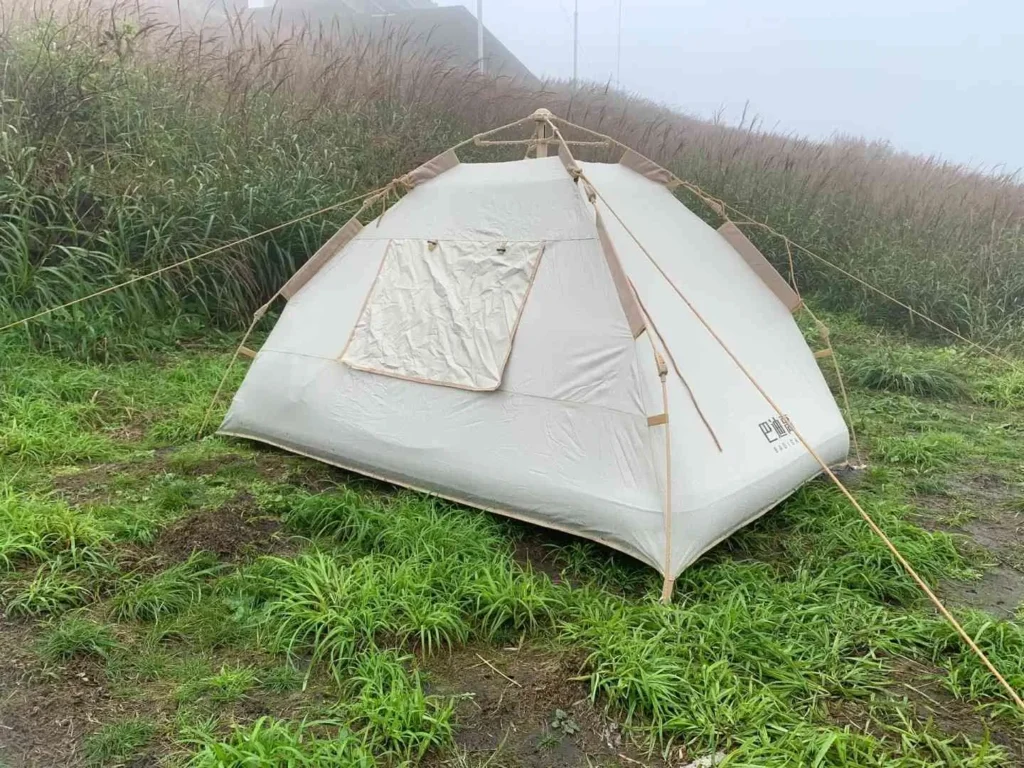
Photo Credit: CampingAttitude.com
That kind of performance comes at a price, though. Dyneema tents aren’t cheap. Why? Because the fabric is insanely light, super strong, and was originally made for sailboat sails.
Just one heads-up: even if the fabric is waterproof, that doesn’t mean the rest of the tent won’t have problems. Fabric matters, but seams and setup do too.
Seam Sealing
Here’s a quick thing to check inside your tent—look up. See those seams where the fabric panels meet? Make sure they’re sealed.
Seam sealing means there’s waterproof tape covering the stitches. If there’s no tape, water can sneak in through those tiny holes. Some tents come seam-sealed. Others don’t.
If yours isn’t, don’t panic. You can do it yourself. Just grab a seam sealing kit. They’re easy to use. This is one of those details that’s easy to miss—but super important when you’re buying a tent.
And hey—your gear matters too. Rain jackets, especially. I’m wearing the Mountain Hardwear Stretch Ozonic. It’s 100% nylon and uses Dry.Q Active waterproofing.
Mistake #2: Not Using Guy Lines
Most new campers don’t know how to use guy lines—or what they even are. A guy line is a cord that comes off your tent to a tie-out point.
Some manufacturers include them; others don’t. If not, you’ll need to buy some. Stake them out away from the tent to give it more stability in bad weather.
Don’t pull them super tight. A little slack is good—it keeps your tent from ripping.
If there’s a storm coming, make sure your guy lines are in place. It can make a big difference at 3 a.m. when you’re trying to sleep.
Mistake #3: Skipping a Ground Cloth
This one’s super common—no ground cloth under the tent. Some campers just forget. Others don’t even know they need one.
Here’s why it matters. Look inside the tent. The floor is thin. Even with a pricey tent, I wouldn’t count on that fabric to keep me dry.
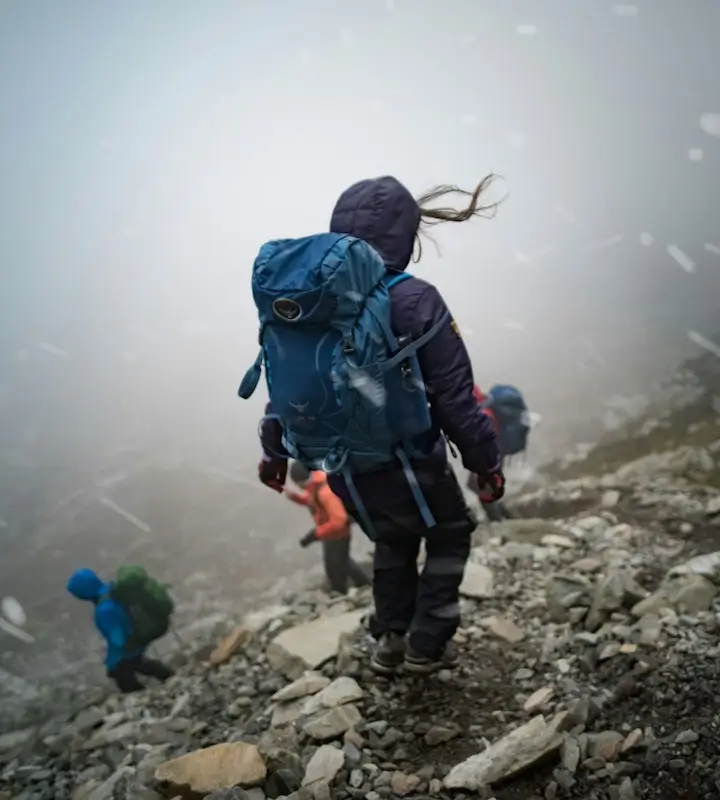
Photo Credit: @Lucas Canino (Unsplash)
You need something underneath—a ground cloth or footprint. But here’s the trick: make sure it’s a little smaller than your tent floor. If it sticks out, rain can land on it.
Then water runs between the cloth and your tent… and guess what? You’re basically sleeping on a sponge. That’s how you end up with a cold, wet, miserable night.
A ground cloth doesn’t just keep water out. It also protects the bottom of your tent from thorns, sharp rocks, and sticks. Simple fix. Big difference.
Mistake #4: Not Looking Up
This one’s big—look up when you set up under trees. People seek tree cover but forget to check above for danger.
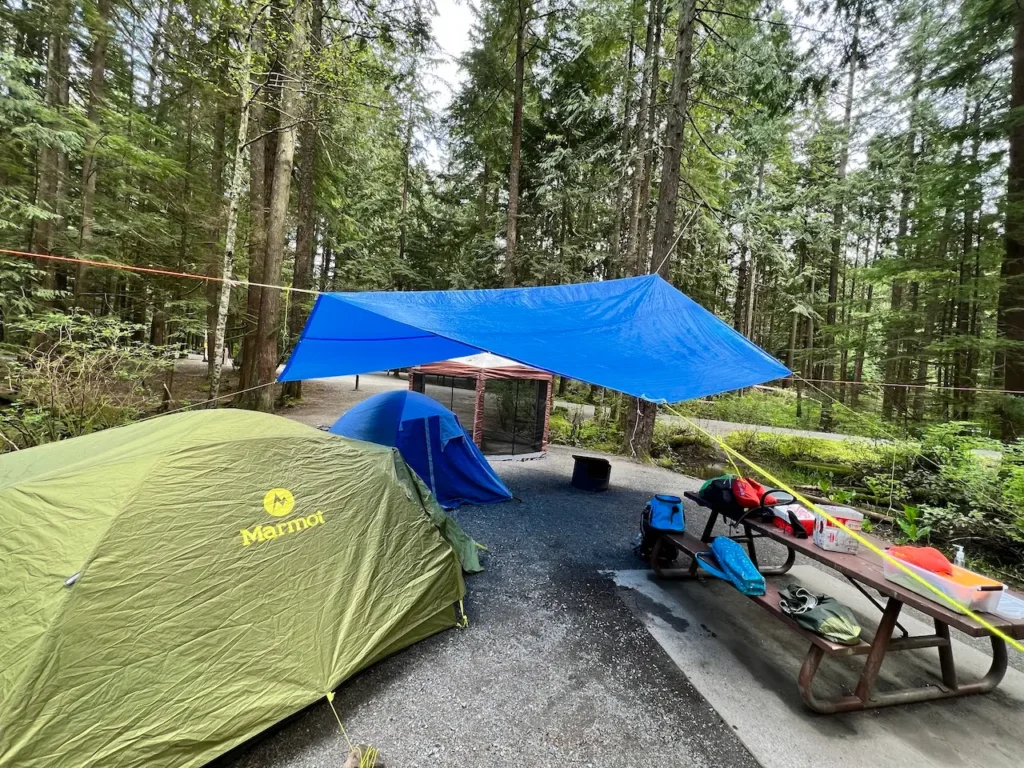
Photo Credit: Outdoorfam.ca
This happened to me once. I camped here in a hammock. Came back later and found a dead tree had fallen right where I’d camped. That could’ve ended very badly.
So always look up for dead branches or trees before setting up camp. It could save your life.
Mistake #5: Not Using a Liner in Your Pack
Another common mistake: not using a liner inside your backpack.
Here’s an easy budget fix: use a trash bag.
Put the trash bag inside your backpack first. Then load all the gear you want to keep dry—sleeping bag, clothes, pillow—into the bag.
Roll the bag closed. Now everything inside is waterproof, no matter how bad the weather gets.
Leave a Comment