
From icy mountain passes to sun-drenched coastal trails, these are the world’s most breathtaking hiking destinations every adventurer should experience:
Photo Credit: @Cullen Jones (Unsplash)
1. Laugavegur Trail – Iceland
The Laugavegur Trail runs 55 kilometers through Iceland’s highlands. It starts in Landmannalaugar and ends in Þórsmörk. Along the way, it crosses lava fields, snow patches, and bright rhyolite mountains. Each section looks like a different world.
National Geographic ranks it among the best hikes on Earth. That’s no exaggeration. The views are wild, raw, and unforgettable.
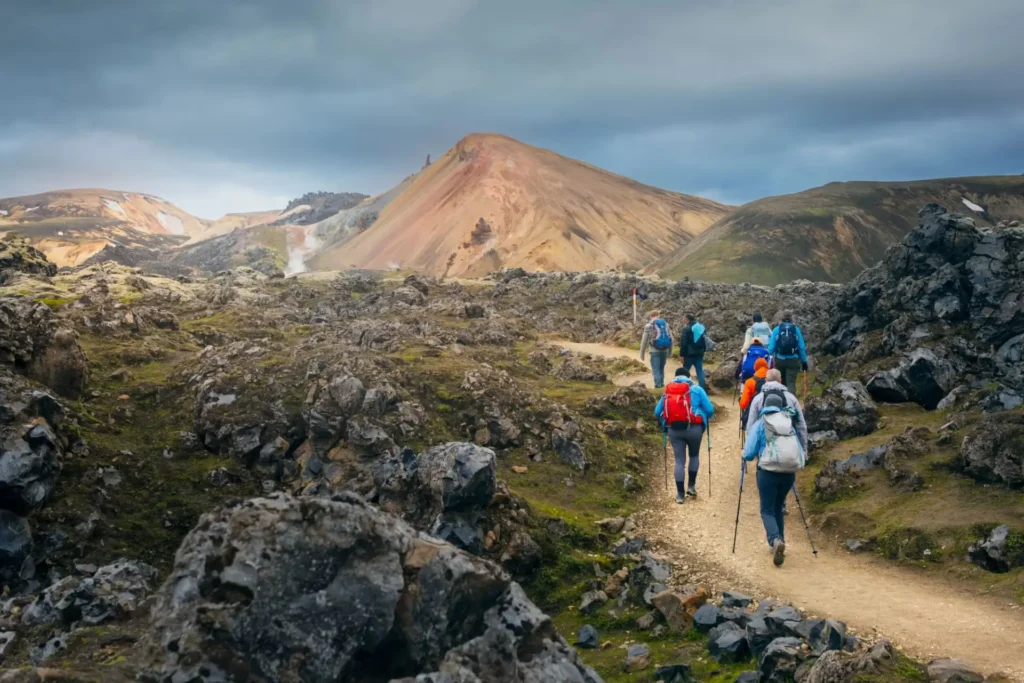
Photo Credit: Icelandia.com
This trail only opens in summer. June to mid-September is the sweet spot. Weather changes fast. Sun, wind, rain—sometimes all in one hour.
Campgrounds dot the trail. So do cozy mountain huts. Both work, depending on how you like to travel.
There are rivers to cross. Peaks to climb. Quiet valleys to rest in.
It’s not the hardest trail out there, but it’s not a walk in the park either. It’s for those who want something real. Something a little unpredictable. Something worth every step.
2. Tour du Mont Blanc – France / Italy / Switzerland
The Tour du Mont Blanc circles Western Europe’s highest peak across three countries—France, Italy, and Switzerland. It covers around 170 kilometers and takes 8 to 12 days to finish. The route climbs over high alpine passes, drops into glacier-carved valleys, and passes through quiet mountain towns.
The eastern section, from Courmayeur to Chamonix, runs about 90 kilometers with over 5,000 meters of elevation gain. The trail crosses the dramatic Col Ferret into Switzerland and ends with rocky ridgelines above Chamonix Valley.
Mountain huts and refuges are spaced out along the way. Some offer warm meals and fireplaces, but most have shared rooms.
Weather is unpredictable. Snow and sun can swap places fast. Proper gear, strong legs, and a few multi-day hikes under the belt are essential.
This is not a tourist walk. It’s a real mountain journey—steep, wild, and unforgettable at every turn.
3. Annapurna Circuit – Nepal
The Annapurna Circuit is a wild ride through the heart of the Himalayas. It covers around 160 kilometers and climbs from lush rice paddies to frozen mountain passes. The trail starts in Besisahar and ends in Muktinath.
Every day looks different. Villages, forests, waterfalls, and endless switchbacks. Then come the snow peaks.
The highest point is Thorong La Pass—5,416 meters up. Getting there takes time. Most trekkers need 10 to 14 days to finish the circuit. Acclimatizing is key. So is patience.
No guide or porter is required, but a solid plan matters. Guesthouses are simple. Hot water is a luxury. Power outlets are gold.
Weather flips fast. One day feels tropical. The next, you’re in snow. And yes—there are a lot of stairs.
The trek is tough. But it’s worth it. Every turn gives you something new. Annapurna doesn’t hold back. It gives everything.
4. Skyline Trail – USA
The Skyline Trail in Mount Rainier National Park is a 5.5-mile loop with 1,700 feet of elevation gain. It starts from Paradise—yes, that’s the name of the trailhead—and offers nonstop views of Mount Rainier towering above the meadows.
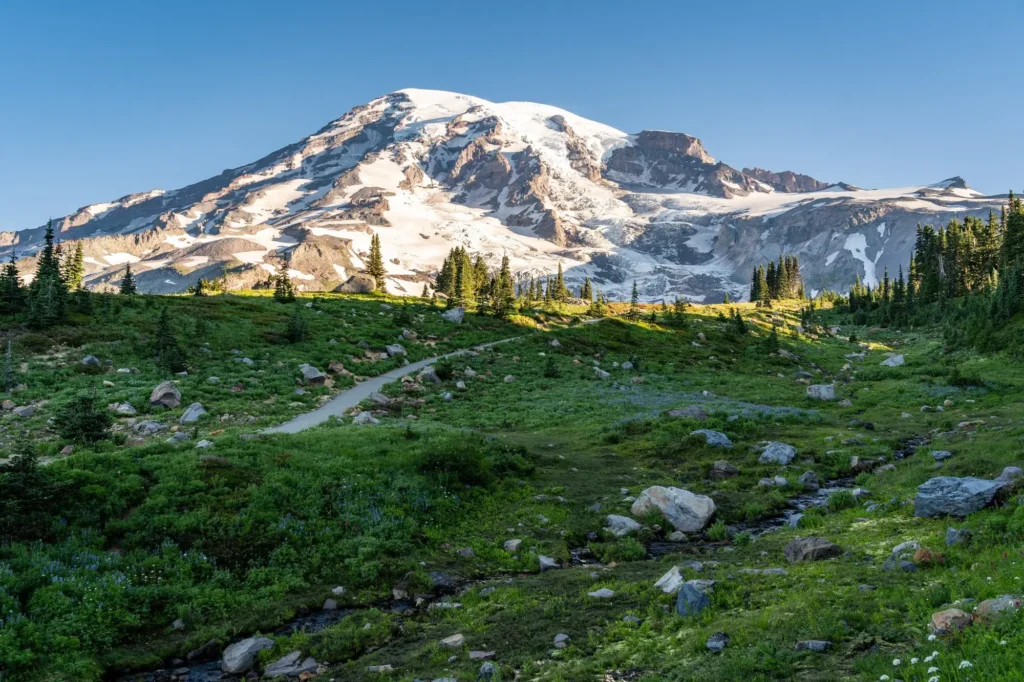
Photo Credit: WheatlessWanderLust.com
This is not a long hike, but it feels like a full-on alpine experience. Wildflowers, waterfalls, and snow patches dot the trail in summer. The higher you go, the better the views get. From the ridge, Mount Rainier feels close enough to touch. On clear days, even Mount Hood and Mount St. Helens show up on the horizon.
Crowds are part of the experience in peak season, but the scenery more than makes up for it. The final stretch is paved, winding past small waterfalls and panoramic lookouts.
This loop delivers big mountain drama in a half-day package. A clear day here is something you don’t forget.
5. Pekoe Trail – Sri Lanka
The Pekoe Trail stretches 300 kilometers through the central highlands of Sri Lanka. It begins in Kandy and winds through tea country, forested hills, and misty mountain paths, ending in Nuwara Eliya. The trail is divided into 22 stages, each between 10 and 15 kilometers—ideal for half-day walks.
This is the country’s first long-distance hiking route. It blends rich biodiversity with deep cultural roots. One moment you’re walking through a quiet tea estate, the next you’re in a lively village festival.
The trail supports local communities, encourages low-impact travel, and tells the story of Sri Lanka’s iconic tea heritage.
Expect waterfalls, birdsong, shifting clouds, and ridge views straight from a movie set. Parts of the trail pass locations used in Indiana Jones and Elephant Walk.
It’s immersive, unpredictable, and full of surprises. And yes—walking is the only real way to understand tea.
6. Kumano Kodo – Japan
The Kumano Kodo is an old pilgrimage trail tucked into Japan’s Kii Peninsula. It winds through thick forests, over misty mountains, and past centuries-old shrines. Some paths are over 1,000 years old.
Most hikers begin in Nachikatsuura. First stop: the famous Nachi Falls. From there, the trail climbs. And it doesn’t stop climbing for a while. One section is even called “the path above the clouds.”
It’s quiet. Peaceful. You’ll pass mossy steps, tiny statues, and maybe a snake or two. Sometimes you’ll walk for hours without seeing anyone.
There are vending machines in the middle of nowhere. Tea fields. Mountain views. Shrines with no one else around.
At the end, many spend the night in Koyasan, a mountaintop temple town. Some sleep in monasteries with the monks.
This isn’t just a hike. It’s a slow walk through sacred ground. A trail that feels alive.
7. Trolltunga – Norway
Trolltunga is wild, dramatic, and not for the faint of heart. It’s a 28-kilometer round-trip hike that takes about 10 to 12 hours. Long day. Big payoff.
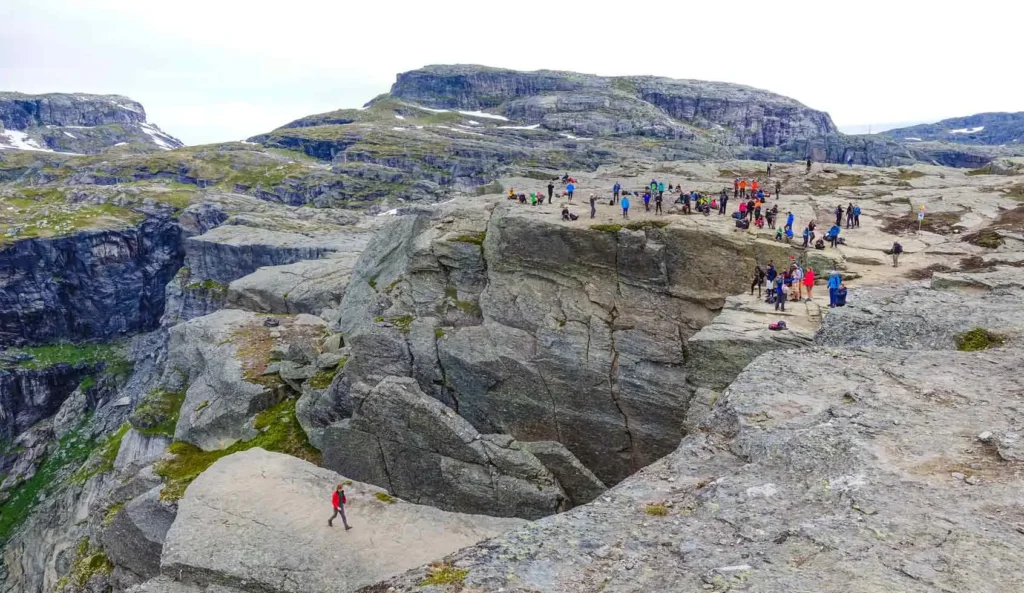
Photo Credit: IamAileen.com
The trail starts near Odda and climbs hard right from the start. Snow, mud, rocks—expect it all. The path winds through remote mountain terrain before you reach the prize: a rock ledge sticking out over a cliff. That’s Trolltunga.
The hike is no joke. Weather changes fast. It gets cold. It gets steep. In early season, snowshoes or crampons are a must. Guided hikes are smart outside summer.
And the view? Unreal. You get fjords, glaciers, silence. Standing on the tongue isn’t always possible. Ice makes it dangerous. But honestly, the hike itself is the real experience.
You’ll sweat. You’ll struggle. But you’ll remember every step. This one sticks with you.
8. West Coast Trail – Canada
The West Coast Trail is raw, remote, and unforgettable. It runs 75 kilometers along the wild coastline of Vancouver Island. It was built to save shipwrecked sailors. Now it pulls in thousands of hikers every year.
The terrain? Tough. Mud, sand, ladders, cable cars, and slippery boardwalks. Some days feel endless. But then—boom—you spot whales offshore. Or sea lions barking from the rocks.
There’s beauty at every turn. Forest, waterfalls, sea caves, and driftwood beaches. You climb cliffs. Cross creeks. Sleep by the ocean.
The trail has history too. Old shipwrecks. Ancient forests. First Nations land. There’s even a lighthouse still in use.
And if you’re lucky? You’ll hit Nitinat Narrows just in time for fresh salmon and a cold beer.
Every blister, every soaked boot, every mile—it’s all worth it. The West Coast Trail isn’t easy. But it’s magic.
9. W or O Trek – Chile
Torres del Paine is the kind of place that feels unreal until you’re standing in it. The W Trek and O Trek both lead deep into Patagonia’s wild heart.
The W is the shorter option—four to five days. It’s packed with big views: Las Torres towers, French Valley, and the icy face of Grey Glacier. Each day delivers something new—windy ridgelines, glacier-fed lakes, hanging glaciers.
The O Trek is the full circuit. It takes a week or more. It loops behind the mountains, through remote valleys and over John Gardner Pass—the highest point. From up there, the view of the Southern Patagonian Ice Field is massive, endless, and worth every step.
Campsites and refugios are scattered along the trail. Some go self-supported. Others book full board—tent, meals, everything ready. Either way, it’s an adventure of weather, endurance, and quiet awe.
And the water? Still clean enough to drink straight from the streams.
10. Transcaucasian Trail – Georgia
This trail is wild, raw, and still in the making. The Transcaucasian Trail runs deep through Georgia’s Caucasus Mountains. It’s long, remote, and full of surprises.
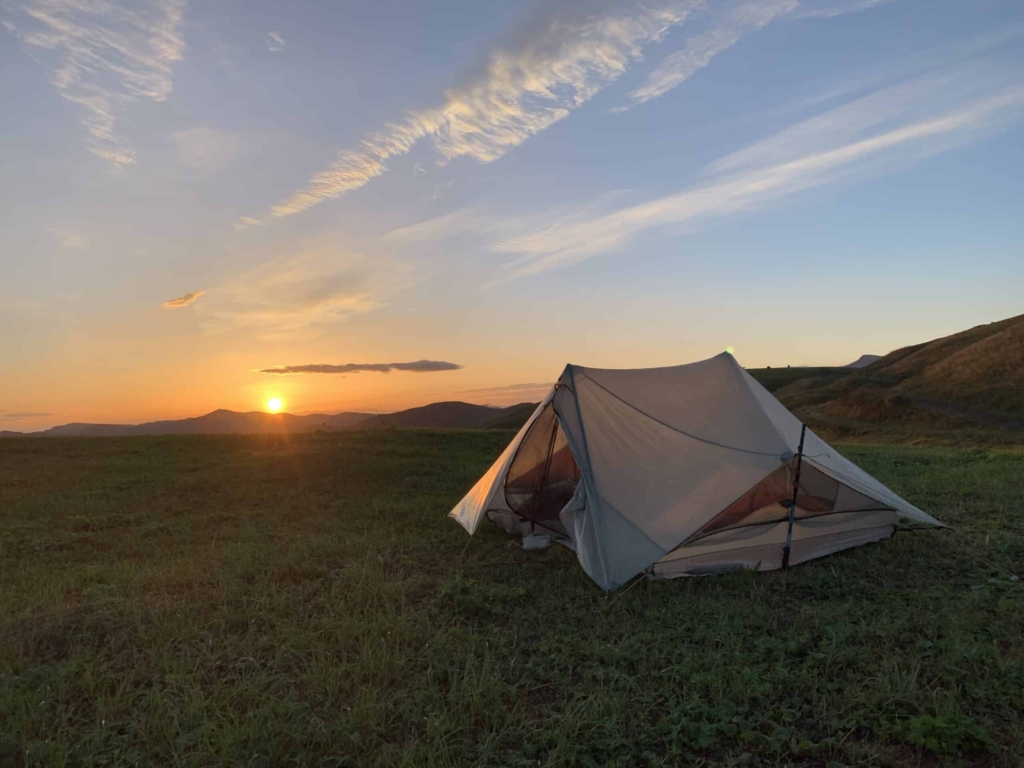
Photo Credit: LandCruisingAdventure.com
Starting near Chuberi, it winds through ancient villages, open valleys, and high alpine passes. Parts of it cross the stunning Svaneti region, linking Mestia and Ushguli. Think glacier rivers, freezing mountain winds, and peaks so close they feel like they’re watching.
Some nights are spent in cozy guesthouses. Others—under the stars or even inside a shepherd’s tent. One day you’re hiking through golden forests. The next, you’re pushing through snow at nearly 3,000 meters.
The trail isn’t fully marked yet. There are no crowds. Just shifting weather, endless beauty, and the kind of hospitality that makes you pause. It’s not easy. But that’s exactly what makes it unforgettable.
11. Inca Trail – Peru
The Inca Trail is 43 kilometers of pure magic and muscle burn. It leads straight to Machu Picchu—one of the New Seven Wonders of the World. The hike starts at Kilometer 82 and climbs to Dead Woman’s Pass at 4,200 meters. That stretch is no joke. It’s steep, it’s long, and the air gets thin.
But the views? Unreal. Ancient ruins. Cloud forests. Stone staircases built by the Incas themselves.
Most people do the four-day trek with a tour company. It’s required. Only 500 permits are given out daily, so booking early is a must. The crew sets up camp, cooks fresh meals, and helps carry gear. Some even bring a toilet tent.
The weather changes fast—sun one minute, rain the next. Layers are key. Altitude sickness is real, so spending time in Cusco first helps.
Walking into Machu Picchu at sunrise, after days on the trail, feels legendary. It’s something you’ll never forget.
12. Milford Track – New Zealand
The Milford Track is a 53.5 km hike through Fiordland National Park. It’s often called the finest walk in the world. And honestly? It lives up to the hype.
The journey starts at Lake Te Anau. From there, the trail winds through rainforests, valleys, and glacier-fed rivers. You’ll climb up and over McKinnon Pass, then drop into Milford Sound.
It’s quiet out here. Just waterfalls, birdsong, and the sound of your boots on the track. The water’s so clean you can drink straight from the streams.
There are huts to sleep in each night. No showers, but plenty of charm. And yes—bring bug spray. The sandflies don’t play around.
Weather changes fast. One moment it’s sunny. Next, you’re soaked in rain. But that’s part of the adventure.
It’s a wild, beautiful trail. The kind that makes you forget your phone and remember how small you are in a big, amazing world.
13. Kalalau Trail – Hawaii
The Kalalau Trail runs 35 km along the rugged Nā Pali Coast on Kauai. It’s one of the most breathtaking—and dangerous—hikes in the world. Sheer cliffs. Remote valleys. Wild weather. No roads in or out.
Permits are required. And hard to get. But for those who do, it’s a rare chance to reach Kalalau Beach, a hidden gem surrounded by towering cliffs and waterfalls.
The trail starts gently. Then it gets real. Narrow paths hug cliffs high above crashing surf. Rain turns everything slick. River crossings can flood fast. But the views? Unforgettable.
Halfway in, it’s just you and the jungle. And the deeper you go, the quieter it gets. The last few kilometers are tough. But arriving at Kalalau Beach feels like entering another world.
There’s no cell service. No crowds. Just ocean, cliffs, and stars. A hike like this changes you. And the way back? That’s a whole new story.

Leave a Comment