I’ll be honest with you as someone who has been hiking for years – deciding what gear you really need as a beginner can be a total nightmare. When I first started out, I got overwhelmed trying to decipher all the lingo and piece together affordable kits from campshares and outdoor stores.
But I’ve learned that you’ll make the best choices if you really understand what you need your gear to do for you out on the trail.
Four Key Considerations for Newbie Hikers
That’s why I always recommend beginner hikers start by answering these 4 simple questions:
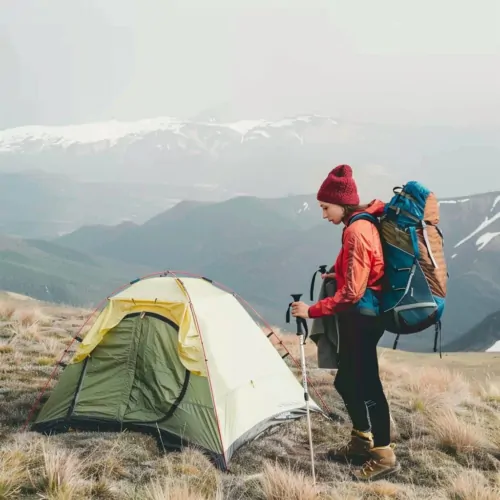
Once you nail down the basics of where, when, how often, and how far, putting together an affordable gear kit gets much easier. In this guide, I’ll cut through the clutter and cover the true essentials – clothing, footwear, packs, hydration, navigation, and more. You’ll learn what’s worth spending more on versus where you can save some cash.
It’s super important to have the proper gear, and I’m talking about keeping you safe, not just comfy. If you take a little time to think it through and pick up some all-around good gear, you won’t have to spend too much. You’ll be all set to hit those trails feeling sure of yourself.
How to Prepare for A Hike
Before any hike, it’s important to prepare, which I always do. Whether it’s a challenging week-long trek or just a trip to the store. Preparation can sometimes save your life, I’m not joking! Be in shape and plan everything in advance.
You don’t have to be an athlete, but being in good physical condition is simply essential. I started with easy short hikes and gradually moved on to more difficult trails. The same approach applies if you’ve started going to the gym. Everything gradually and leisurely, without overloading on the first days.
My second hike turned out to be more challenging than the first, thinking I was already an experienced hiker, I expended a lot of energy on the first part of the trail, and you could say I almost reached the end of the path without any strength left. Now I understand what I’m capable of: how far to go, how much time the ascent will take, and which trails to choose. The more often I hit the trails, the more confidently I take on complex routes.
Once, during one of my hikes, the weather changed suddenly, it started to rain, and I got soaked to the bone. As you can imagine – I didn’t take a raincoat with me. That’s why it’s so important to research the route and make a plan.
Before each hike, I thoroughly study the route. I check the weather, read reviews from other people, and check maps. This helps me understand what to expect and prepare for almost all possible scenarios.
After gathering information, I make a plan. I determine how much time the trip will take, what items to bring, and even plan where to take breaks. I always tell someone from my family or friends where I’m going and when I plan to return.
And Remember: without planning, it’s better not to go on any hike, neither an easy one nor a very easy one!
Here’s my list of what I pack for a day hike:
Top 10 Must-Pack Items for Beginner Hikers: Your Day Hike Essentials Checklist
- Easy-to-Carry Bag
- Drinks
- Bites to Eat
- Finding My Way
- Patch-Up Stuff
- Change of Clothes
- Stay Dry Cover
- Good Shoes
- Sun Blockers
- Just in Case Gear
If I plan a one-day hike, I don’t bring many things with me. It’s important to take all the essentials for my safety; comfort is not my top priority in this case. Since I’m carrying fewer items, I also take a smaller, lightweight, and spacious backpack.
What do I pack in it?
Water is a must! I know the planned route, and there may be springs along the way, so after emptying my water bottle, I refill it with spring water, which is perfect for a one-day hike without having to carry heavy bottles. This is one of the mistakes many beginners make. Sometimes, I also take a hydration pack.
Moving on, for snacks, I take dried fruits, nuts, and a few sandwiches. I can’t rely on my mobile phone, as you might understand, the signal can be lost, and the phone can accidentally break or run out of battery, so I bring a paper map, compass, and a lightweight mobile charger (mine also charges from the sun).
I also bought a rubber case for my phone, which protects it from impacts if dropped and is also waterproof. A basic first aid kit is a must. If a change in weather is expected, I check the weather forecast a few days in advance and also bring a lightweight rain jacket or poncho. They don’t take up much space in the backpack but can save you from rain and moisture. Plus, it can be spread out on a log if you decide to stop and rest or have a snack.
Regarding footwear… for short hikes, I purchased lightweight hiking boots with a high cut for ankle protection. I often roll my ankles on uneven surfaces and stumble over stones, so extra protection is a benefit for me. If you are more agile and flexible, you can choose a shorter model.
Protecting your face from the sun is essential. I remember on my first hike, I forgot to bring a hat, and the weather was incredibly hot and sunny. The result was a sunburned face and ears. Be sure to bring sunscreen, sunglasses, and a hat for sun protection.
I also carry a pack with emergency items. In it, I put a whistle, a small flashlight or headlamp, and a fire starter, just in case I need to signal for help or stay out after dark.
Footwear
Hiking Boots vs Hiking Shoes
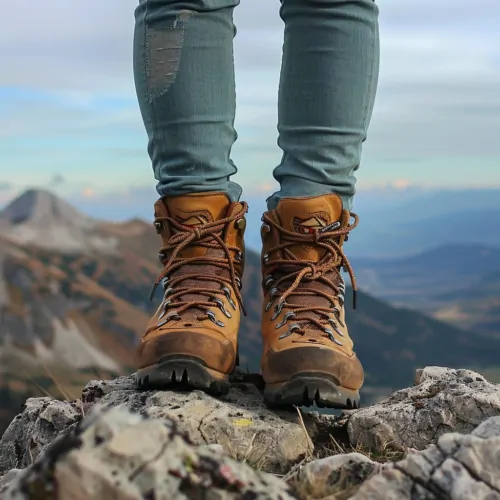
I have three different pairs of hiking footwear in my arsenal. Which pair I wear depends on the duration and difficulty of my upcoming hike.
If it’s a one-day hike without an overnight stay – I wear hiking shoes; they are light, comfortable, and easy to maneuver in.
I got hiking boots for trips that go on for 2 to 3 days and involve sleeping outside. On such trips, I take a larger backpack to fit all the necessary items, and the backpack is heavier in these cases, so I need sturdier and more durable hiking boots. These boots help your ankles on rough terrain with lots of rocks and mud. They keep your ankles safe from twists.
The third option, backpacking boots, is suitable for more professional hikers, who go on quite long hikes, with heavy and dangerous trails.
Brands I can recommend:
Vasque, Lowa, Keen – if you need hiking boots.
Lowa Renegades – one of my favorite models. These boots have helped me more than once and lasted about 7 years.
Merrell, Keen, and Salomon – these brands are suitable if you need hiking shoes. They are not only great for light, short hikes but also as casual footwear. They maintain a balance between weight and foot protection.
Proper Socks
Materials
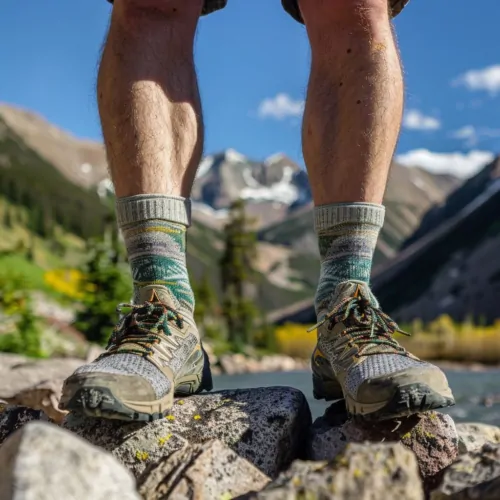
Remember! Avoiding cotton socks is an absolute must to prevent blisters and discomfort. I use moisture-wicking fabrics that will pull sweat away from my feet. Merino wool is ideal – it keeps feet dry, prevents odor, and provides warmth even when wet. But good quality synthetic blends like you’ll find in Smartwool or Darn Tough socks work great too at a better price point.
Features
Look for hiking-specific socks with reinforced footbeds, heel and toe cups to prevent bunching. Extra padding in high friction areas like the ball and heel also reduces hotspots that can turn into blisters. Ventilation panels help air flow to keep feet dry. And don’t forget about seamless toe closures – nothing ruins a hike faster than a rubbing toe seam!
Clothing
Base Layers
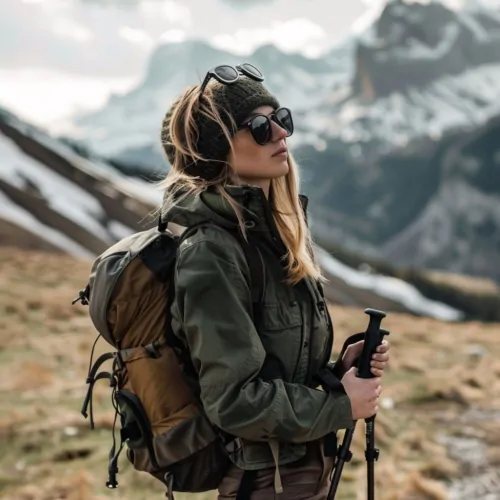
I buy clothes that stop sweat from making me feel wet and cold, especially when I stop moving. It’s best to get tops and bottoms made from special fabrics like synthetic blends or merino wool. I avoid cotton because if it gets wet, it makes me lose heat.
Some reliable sportswear brands are my go-to. Under Armour, Smartwool, Icebreaker, and Patagonia’s Capilene have proven good for me. They’re more expensive, but they’re worth it because they keep the sweat away really well.
Insulation Layers
Fleece, down, synthetic insulation
For insulating midlayers to wear over your base, fleece is a tried-and-true option that continues getting better and lighter thanks to brands like Patagonia and The North Face. If you’ll be hiking in wet conditions, consider a lightweight insulated jacket or vest filled with down or a synthetic insulation like PrimaLoft. They pack down smaller than fleece.
Layering system
The key with insulation is having multiple thin-to-midweight layers you can add or remove as conditions change. Start with a moisture-wicking base, add an insulating midlayer, then top with a weather protection outer layer to block wind/rain.
Outer Layers
You absolutely need a packable rain jacket or hard shell made from a waterproof/breathable material. Look for trusted name-brand membranes like Gore-Tex, eVent, or NanoPro. They’ll keep you dry from the outside while still allowing sweat vapor to escape.
For windy days, a lighter wind shirt can be enough over your base and mid insulation layers. I prefer models with DWR coatings that bead up light moisture.
Accessories
Backpack
Types (daypacks, multi-day packs)
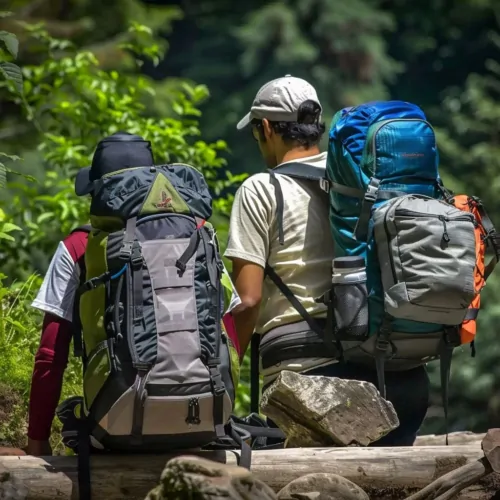
As a beginner hiker, you’ll likely start out with just day hikes, so a daypack in the 20-30 liter range should suffice. These lightweight packs have enough capacity for extra layers, food, water and the ten essentials.
Once you start taking on overnight adventures, you’ll need a larger multi-day pack from 45-65 liters. The extra volume allows you to carry camping gear like your tent, sleeping bag and pad.
Capacity and Fitting
Don’t just look at the total liter capacity though – the most important factor is a good fit tailored to your torso length and frame. An improperly fitted pack will cause discomfort and fatigue.
Gregory’s Jade and Osprey’s Aura lines offer exceptional custom-fitted features, making them my preferred choice for overnight trips when carrying gear. The interchangeable hip belts in these packs provide superior comfort and support, ensuring a pleasant journey no matter the distance.
Gender-Specific Fits
Most major pack brands like Osprey, Gregory and Deuter make gender-specific fits to better accommodate the differing torso lengths and hip dimensions between men and women hikers.
I can’t overstate how much more comfortable women’s-specific packs are compared to typical unisex models. The shaped hip belts and shoulder harnesses prevent chafing and stabilize loads much better.
Recommended Brands/Models
For daypacks, I’m a fan of Osprey’s sleek and ventilated Talon and Tempest series. The anti-gravity suspension makes them incredibly comfortable.
For overnight trips requiring gear transportation, my go-to packs are Gregory’s Jade and Osprey’s Aura lines due to their superior custom-fitted features, including interchangeable hip belts.
Navigation
Topographic Maps
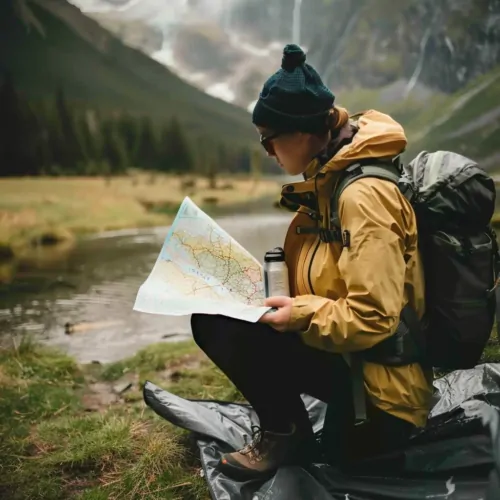
I never, ever hit the trail without a good old fashioned topographic map and compass, even if I’m planning to use a GPS device or app. Paper map is a must-have for beginners.
Why? Because electronics can fail, rendering digital maps useless.
Topo maps show the Three-dimensional terrain in great detail, including hills, valleys, rivers, and contour lines indicating elevation changes. This level of area knowledge is invaluable if you get turned around.
Compass
A basic orienteering compass is an essential companion to my topo maps. I advise you to learn how to take bearings, triangulate your position and navigate only by map and compass. Being able to use a compass keeps you self-reliant if your batteries die or you get off-trail.
GPS/Smartphone Apps
Speaking of handhelds, GPS units and apps do offer much more user-friendly navigation nowadays. I’m a big fan of the Gaia GPS app – you can download detailed topo maps offline.
Units like the Garmin inReach give you SOS capabilities too. But remember, these should supplement your core skills with map and compass, not replace them entirely.
Hydration
Water Bottles vs Hydration Reservoirs
Proper hydration is key for any hiker. You’ll want to replace those water weight with sodium too as you sweat it out.
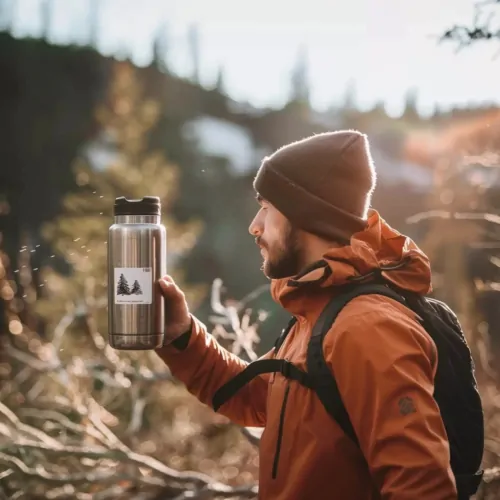
The old-school water bottle method works just fine – just be sure to get bottles with wide mouths so you can easily refill them and fit ice cubes or hydration tabs inside. I prefer the 1L Nalgene and Hydro Flask bottles.
I like hydration reservoirs made by Platypus, Camelbak, or HydraPak. Having a long drinking tube lets you take frequent sips without having to stop and dig out a bottle. The bladders hold 2-3 liters, ensuring you stay hydrated on longer summer hikes.
Water Filters/Purifiers
You may find yourself far from clean water sources, somewhere deep in the woods, so it is essential to have water filters or water purifiers with you. Don’t rely on the “it looks clean” philosophy – untreated water harbors bacteria and protozoa that can make you violently ill.
For ease of use, pump filters like the MSR MiniWorks or Katadyn Hiker Pro are tough to beat. They’ll quickly turn the skunkiest turbid water into refreshing drinking water. Just be sure to backflush and maintain them properly.
Recommended Brands
For bottles, Nalgene and Hydro Flask are my go-to durable and leakproof options. Platypus and Camelbak make excellent lightweight reservoirs. And for filtration, stick with MSR, Katadyn or LifeStraw’s high-quality microfilters.
Nutrition
High-Energy Snack Options
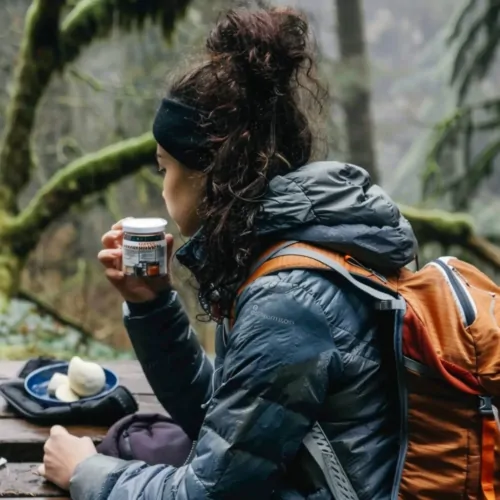
You’ll want to replace those hard-burned calories with snacks that are calorie-dense yet nutritious and easy to eat on the go. I usually take trail mixes with nuts, seeds, and dried fruit; they are a great blend of fats, proteins, and carbs.
Energy bars and gels offer a concentrated source of carbs – look for ones with low simple sugars, though, to avoid sugar crashes. Probar, Larabar, and RXBar make some tasty, wholesome options. And you can’t beat a good old peanut butter and honey sandwich for lasting energy!
Meal Options for Overnight Trips
When stopping to make camp, opt for easy prep meals that require minimum cleanup. Instant rice and grains combined with chicken pouches or summer sausages make hearty one-pot meals.
Dehydrated meals have come a long way too – the new Tandoor Chef and Good To-Go bowls are legitimately delicious. Just add boiling water for a tasty recovery feast after a long day on the trail. And don’t forget pocket snacks like trail mix and jerky!
Shelter
Tents
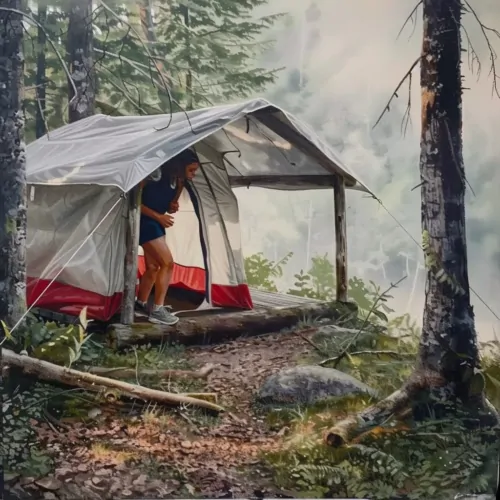
For overnight gear, starting with just a basic 2-person freestanding tent is perfectly adequate. This gives you a simple setup without going ultralight (and ultraexpensive) just yet.
Solid budget options include the REI Passage and Kelty Late Start tents which use lightweight aluminum poles and non-bulky materials. Once you gain more experience, you can move to higher-end ones like the Big Agnes Copper Spur with more livable space.
Sleeping Bags
Your sleeping bag is not an area to skimp – a good warm bag is vital for restful backcountry bivvies. But you don’t need an ultralight -20F mummy bag right away either.
A 3-season 20-30F synthetic fill bag like the Kelty Cosmic or Teton Sports LEEF does the trick for most backpacking in milder conditions. Spend more later on compressible down if you’ll be camping in freezing temps. Additionally, consider carrying an emergency bivvy for added protection in unexpected situations.
Sleeping Pads
An insulated sleeping pad adds crucial warmth from the ground while also providing much-needed cushion from bumpy surfaces.
Foam pads like the classic Therm-a-Rest RidgeRest are affordable and warm but bulkier. Inflatable pads like the Sea-to-Summit Ether pack down smaller yet are comfy and insulating too.
Between your bag and pad rating, shoot for a combined temperature rating of about 10-15F lower than the coldest expected low temp.
Miscellaneous Gear
Trekking Poles
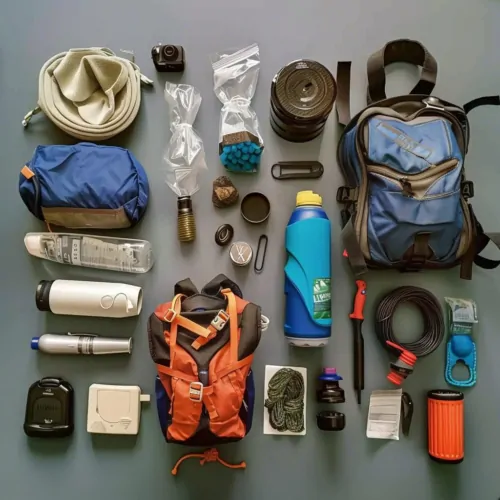
Sometimes I use trekking poles—they may look funny, but they’ll quickly become your new best friends on the trail. They add stability and take considerable strain off your knees, especially on steep descents. Plus, they improve your overall balance when crossing streams or negotiating rocky terrain
I recommend lightweight, adjustable hiking poles made from carbon fiber or aluminum. My poles have the flick-lock adjustment style, which allows me to easily lengthen or shorten the poles. Popular reliable models come from Black Diamond, Leki, and REI.
Headlamps/Flashlights
A headlamp or flashlight for emergency lights should be used for every hiker. A headlamp keeps your hands free for activities like setting up camp after sundown.
My go-to is the Black Diamond Spot – it has a bright, focused beam for lighting up the trail ahead, as well as dimmer peripheral lighting for up-close tasks like cooking or reading maps. Just be sure to pack spare batteries!
Fire Starters
Being able to start a campfire for warmth or signaling is an important survival skill. Traditional waterproof matches, along with a firestarter, are cheap and easy options, but I also carry a stormproof lighter as backup.
For tinder, cotton balls smeared with petroleum jelly light easily, as do small paraffin fire starters. And don’t forget a folding camp saw or axe if you need to process firewood.
Multi-Tools
Also, you should have a good multi-tool with all the little gadgets it combines—knife, pliers, screwdrivers, bottle opener, awl, you name it. I use the Leatherman Wave, which I like for its one-handed usability.
While not essential, a multi-tool allows you to accomplish quick gear repairs, food prep, and other camping tasks with ease. Just avoid going overboard with a huge 40 ounce Leatherman unless you’ll use most of the tools.
First Aid Kits
I always bring a simple first aid kit with stuff for fixing blisters, cuts, sprains, or other small hurts I might get while hiking.
I assemble my own kit because it’s cheaper and I can make it how I want. Don’t forget to pack things for sun protection, too. I also suggest carrying band-aids, gauze pads, germ-killing cream, medicine for pain like ibuprofen, blister cushions, sticky tape, cleaning wipes, and any medicine I take regularly.
I include things like scissors, tweezers, and materials for making splints just in case.
Emergency Supplies
Hopefully you’ll never need them, but it’s wise to carry some basic emergency gear. A bright orange space blanket and whistle can aid rescue if you get lost or injured.
Waterproof matches/lighter and fire starters allow you to start a fire for warmth. And a small plastic tarp or lightweight bivy sack makes an adequate improvised emergency shelter if you’re benighted.
Leave No Trace Principles
It’s our responsibility to minimize our impact so future generations can enjoy them too. That’s why, please, follow Leave No Trace principles like:
Learning and practicing Leave No Trace allows us to protect and preserve our precious wild spaces. Embrace it as part of your hiking ethics.
Budget-Friendly Hiking Essentials and Attire for All Seasons
My aim is to bring everything I need without my backpack weighing me down. A too-heavy pack can really slow you down. So, I carry no more than 10-12 essentials in my bag.
- Headlamp: Needed more times than I thought, like when the woods get dark.
- Extra Water: I pack enough water, sometimes a Nalgene or a hydration bladder.
- Extra Food: No-cook snacks like jerky, trail mix, and sandwiches keep me going.
- First Aid Kit: A small one is always in my pack.
- Sun Protection: Sunscreen is a must; I’m currently all about sun hats.
- Multi-Tool: Handy for unexpected fixes.
- Shelter: An emergency shelter – better safe than sorry!
- Fire: I carry a lighter or matches, just in case.
- Navigation: Trusty old topo map and compass because technology can fail.
- Extra Clothes: Nature is full of surprises, so layers are crucial – a down jacket, rain gear, gloves, socks, and a beanie.
- Portable phone charger: Because why not?
Moisture-wicking gear is the best year-round.
Warm Weather Gear:
Despite the heat at the start, it can be cooler up high, so layers are key.
I pack a sun shirt, hiking pants or shorts, merino wool socks (they’re worth the price), boots, a sun hat, and just in case, a lightweight down jacket, rain jacket, gloves, extra socks, and a beanie.
Cold Weather Gear:
Winter gear can be pricier, but there are ways to save money. Cheap materials in summer are okay, but winter? That’s risking hypothermia.
I look for deals on:
- Moisture-wicking base layers
- Water-resistant down jackets
- Again, those merino wool socks
- Insulated boots
- A fleece-lined beanie, neck gaiter, and waterproof gloves
Remember, investing in the right gear pays off, especially when you find budget-friendly options that don’t compromise on safety or comfort.
Conclusion
Recap of Essential Items
As you can see, there’s a decent amount of gear involved in hiking preparedness as a beginner. The true essentials include:
Emphasis on Research and Personalization
With so much gear on the market, do your homework by reading reviews and talking to experienced hikers to determine what makes sense for your specific needs and budget.The great news is you can build up a starter kit affordably, prioritizing versatile, high-quality basics that’ll serve you for seasons to come. Shop sales and closeouts, buy lightly used gear from friends. Don’t go overboard!
Resources for Further Learning
Of course, this guide merely scratches the surface. There’s still plenty more to learn through in-person instruction, books and online courses covering essential skills like:

Leave a Comment